Scripture
Now in the place where he had been crucified there was a garden, and in the garden a new tomb, in which no one had yet been buried. So they laid Jesus there because of the Jewish preparation day; for the tomb was close by. — John 19:41–42
The Event
The Sealed Tomb
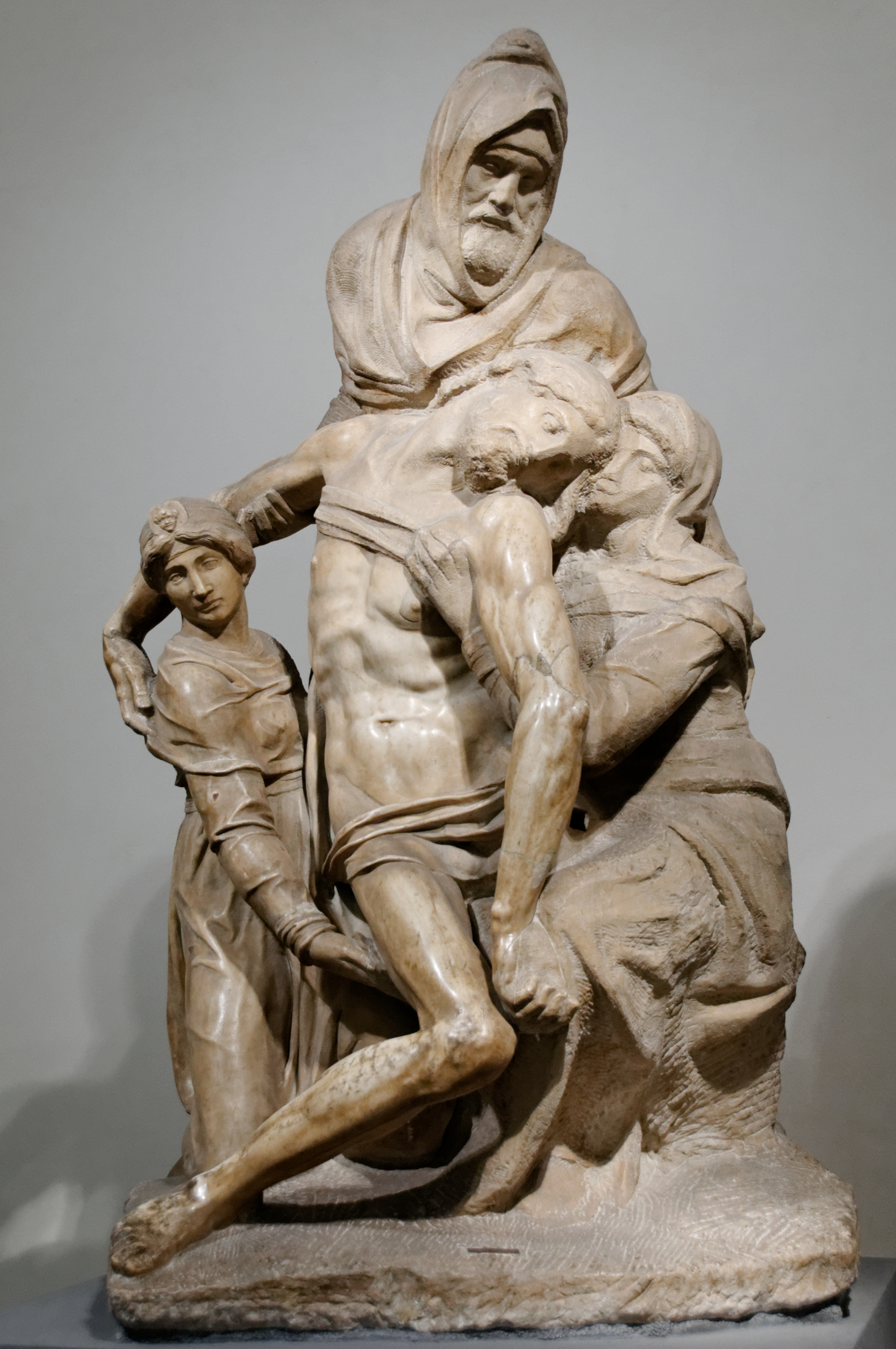
The burial had to be completed before sundown on the Preparation Day — the eve of Passover — because Jewish law forbade burial work on the Sabbath. Joseph of Arimathea and Nicodemus worked quickly. The tomb was near the place of crucifixion: a new tomb, cut from rock, in a garden. They laid Jesus there, rolled the stone across the entrance, and departed.
Matthew's Gospel records that Mary Magdalene and "the other Mary" sat opposite the tomb, watching (Matthew 27:61). The tradition has always included Mary the Mother among those present at the burial, though the Gospel texts are not explicit. What is explicit is the presence of women who refused to leave — who sat with the sealed stone between them and the one they had followed, and did not go.
The next day, at the request of the chief priests, Pilate posted a guard at the tomb and had the stone sealed. The world, as far as anyone outside the small circle of disciples could see, was finished with Jesus of Nazareth. The chapter was closed. The stone was sealed.
Historical & Theological Context
Holy Saturday: The Day of Absence
The liturgical tradition of the Church marks Holy Saturday as a day of silence — the day without the Eucharist, the day of waiting. The tabernacles are empty, the altars stripped, the churches without the Blessed Sacrament. This stripping is intentional: it attempts to reproduce something of the experience of absence that Mary and the disciples lived on that day. The one who was the center of everything was in a sealed tomb.
Pope John Paul II, in his apostolic letter Rosarium Virginis Mariae, wrote of Mary as the one who most profoundly lived the mystery of Holy Saturday — keeping vigil in faith when all visible signs had been extinguished. In his encyclical Ecclesia de Eucharistia, he called her the "woman of the Eucharist," the one whose faith held the Church together through the hours between death and Resurrection.
Mary's Interior Experience
Faith at the Stone
The Seventh Sorrow is the sorrow of ending. Not the dramatic suffering of the Cross, not the acute grief of holding the body — but the settled, quiet, absolute reality of a sealed tomb. This is what remains when everything else is gone: a stone, a garden, a silence that does not answer.
What Mary held in herself on that day is the subject of profound theological reflection. The tradition believes she held faith in the Resurrection — not as a consolation that lightened the grief, but as a conviction deeper than grief, present beneath it without dissolving it. She did not grieve less because she believed more. She grieved fully, and she believed fully, and she held both in herself through the longest night.
This is the sorrow that closes the Rosary of the Seven Sorrows and opens into silence. After the seventh sorrow, the rosary ends with three Hail Marys for the tears of Our Lady and a final prayer. The silence that follows is not emptiness. It is the silence before the third day — the silence in which the Church has always known that the stone will not hold, that the garden will speak before morning, that the last word has not yet been spoken.
To pray the Seven Sorrows is to walk with Mary through these seven moments and arrive here, at the tomb, in her company. To remain. To believe. To wait.
Prayer
Pray one Our Father and seven Hail Marys in meditation on this mystery. View prayer texts
Then return to the Rosary for the closing prayers.
← Return to the Rosary