Scripture
After this, Joseph of Arimathea, secretly a disciple of Jesus for fear of the Jews, asked Pilate if he could remove the body of Jesus. And Pilate permitted it. So he came and took his body. Nicodemus, the one who had first come to him at night, also came bringing a mixture of myrrh and aloes. — John 19:38–39
The Event
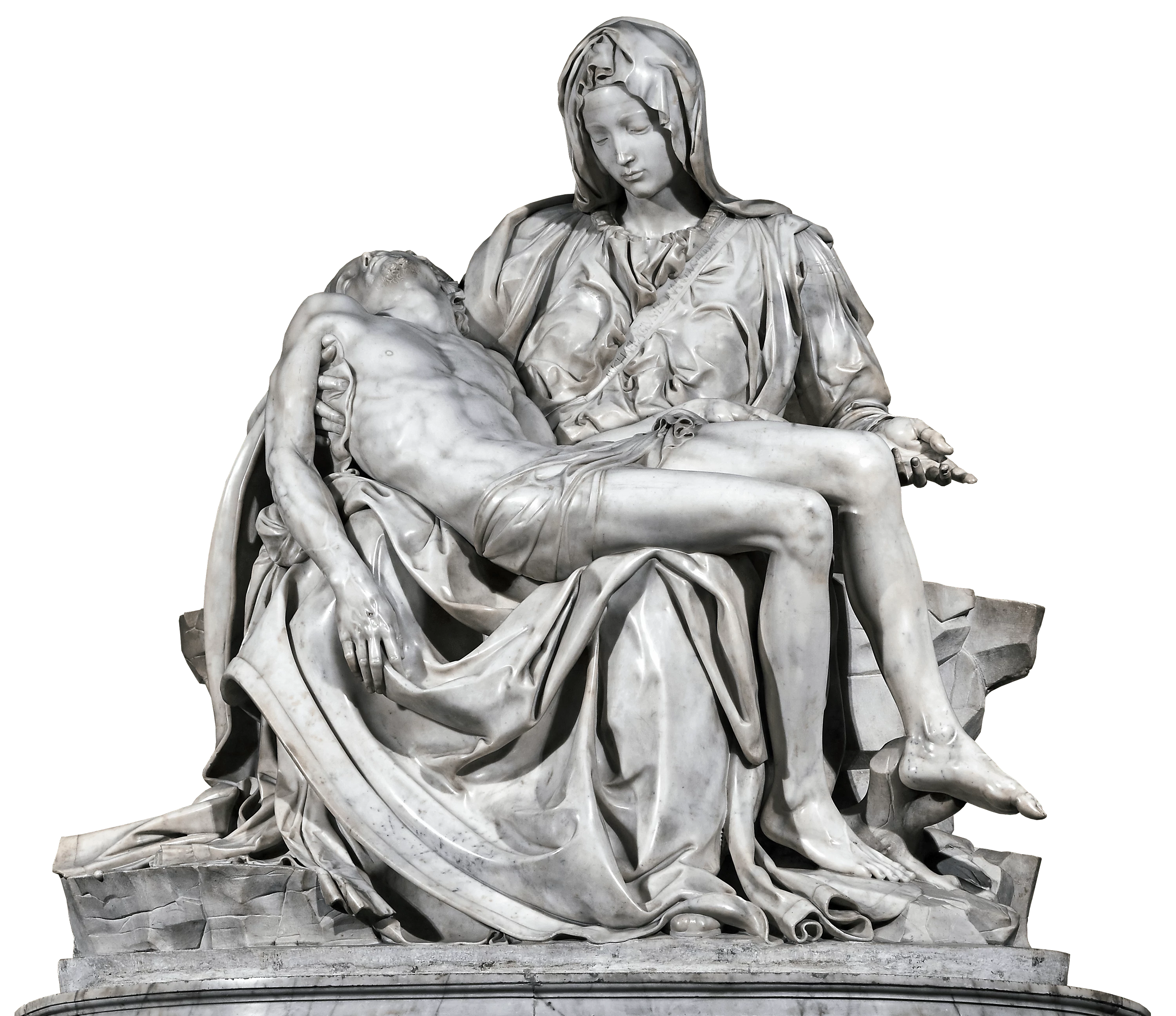
The Pietà
The word pietà comes from the Italian for piety, compassion, tenderness. In art history it refers specifically to a representation of the Virgin Mary cradling the dead body of Jesus after the Crucifixion — and it became, over centuries, one of the most depicted subjects in the entire Western tradition. The reason is not aesthetic. The reason is that this moment contains something that requires contemplation, not simply observation.
John's Gospel places two men at the scene: Joseph of Arimathea, a wealthy member of the Sanhedrin who had become a secret disciple, and Nicodemus, who had come to Jesus at night years before. They came with linen cloths and a mixture of myrrh and aloes — approximately a hundred pounds' weight of spices, a burial preparation befitting a king. They took the body of Jesus from the Cross, wrapped it, and prepared it for burial.
Tradition, preserved in centuries of devotion and art, holds that Mary held her Son's body before the burial. This moment — the Pietà — is not described in Scripture. But the Church has always believed it happened, and the tradition of contemplating it is as old as the devotion itself. It is the moment when the child she first held in Bethlehem is returned to her arms, this time in death.
Historical & Theological Context
The Pietà in Art and Devotion
No image in Western Christian art has been contemplated more persistently than the Pietà. From the medieval stone sculptures of the Rhineland to Michelangelo's marble in St. Peter's Basilica, from Giovanni Bellini's tempera panels to Annibale Carracci's Roman altarpieces to William-Adolphe Bouguereau's luminous 19th-century canvas, artists across six centuries have returned to this same moment, unable to exhaust its depth.
Michelangelo carved his Vatican Pietà at approximately twenty-four years of age. He depicted a Mary of impossible youth — a deliberate theological statement, he explained, because perfect purity does not age. He carved his own name on the strap across her breast — the only work he ever signed. The Florence Pietà, which he worked on in his final years and reportedly smashed in frustration, is rawer, more anguished: Nicodemus looms above, and Christ's body is broken in a way the Vatican marble is not. That unfinished second attempt may be the more honest of the two.
Mary's Interior Experience
Arms That Held Him Twice
She had held him at the beginning. She held him now at the end. The same arms, the same hands, the same body that had carried him for nine months and nursed him through infancy — they received him again, now in the full weight of a grown man, broken and cold. The symmetry is unbearable and exact.
What the tradition asks us to contemplate in the Sixth Sorrow is not primarily the grief — though the grief is real and profound — but the love that did not flinch. Mary received the body of her Son. She did not turn away from what had been done to him. She looked at every wound, she held him with full attention, she was present to the reality of his death without denial or flight. This is the same quality of presence that stood at the Cross — now quieter, now in the stillness after the end.
There is a theological tradition that says Mary's faith was, at this moment, the faith of the entire Church. The disciples had fled. The institution of the Church, such as it existed, had scattered in fear. It was Mary who held the faith alive through the hours between the death and the Resurrection — not with triumph or certainty, but in the silence of a mother holding her dead child, believing what could not yet be seen.
Prayer
Pray one Our Father and seven Hail Marys in meditation on this mystery. View prayer texts
Then return to the Rosary to continue with the Seventh Sorrow.
← Return to the Rosary